One long molecule, spiraling around in a double helix.
Exquisite, ordered, simple and regular.
Two strands of nucleotides, each with a strong backbone
composed of sugar and phosphate.
With what we call nucleotide bases on the inside:
Adenine, 'A',
guanine or 'G', cytosine, 'C', and thymine or 'T'.
And these bases always pair together, according to some simple rules.
A always pairs with T, and C always pairs with G.
These four bases make up an alphabet of four letters, the genetic code.
And that is the key, DNA is a code.
A code that holds all the information to make all living things.
Somehow, DNA must tell each and every cell in the body
what it is to become, and when and where.
But how?
1950s scientists had a big job to do, they had to crack the code.
So if you consider how a code works, let's think it out.
We've got four bases, and we need to make
20 different amino acids.
So if we have a code that just consists of one base,
we could only make four possible amino acids, right, which isn't enough.
So if we had a code that consisted of two bases
that could get together in any combination,
how many different amino acids could we make then?
Yes, 16, exactly. It's not enough is it, we need 20.
so if we had a code based on three bases,
that could get together in any combination,
how many amino acids could we produce then?
Nine? Not quite... yes, 64, exactly.
More than nine and more than we need.
So three bases would work.
And that's exactly what scientists found to be the case,
they worked out the code and they worked out
that it was arranged in threes, a triplet code,
with each group of three bases called a codon.
And each group of three bases or codon specifies or codes
for a particular amino acid.
So we can see that here, here's a codon of three bases
and that will give us an amino acid, which we give another single letter code to.
We needn't worry about the amino acid code for now.
Here's another codon, CCC, that gives us this amino acid, P.
And here's another codon GAA, that gives us that amino acid, E.
So we can start to decode this DNA sequence
and turn it into an amino acid sequence,
so we can see a growing amino acid chain in a protein.
Now I'm not going to waste my time decoding all of that.
Now we've got one here that we prepared earlier,
we know it's the same, this is all these nucleotides,
all these codons decoded into these amino acids.
So here is our protein chain.
So a protein is like a sentence of amino acid letters,
and you can even see that we've got some punctuation
in our sentences, because it turns out
that there are special codons that make something like a full stop
at the end of the protein.
 For more infomation >> সেরা ১৫ টি ফানি ভিডিও না দেখলে পুরাই মিছ||top 15 animals funny video😁 - Duration: 3:43.
  For more infomation >> Никогда НЕ ХОДИТЕ ТУДА в Китае! 💩 - Duration: 10:37.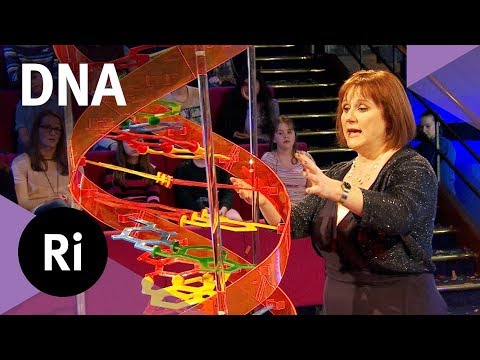
 For more infomation >> COMO FOI VIAJAR SEM MEU NAMORADO | All That Jess#108 - Duration: 14:14.
 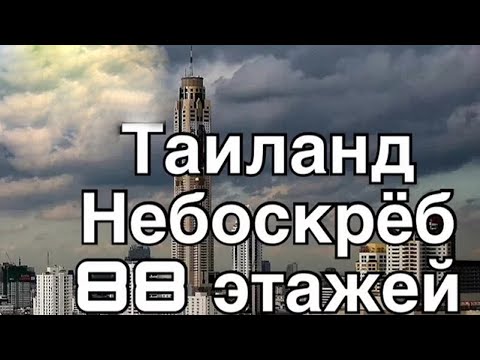 For more infomation >> 238. Baiyoke sky – the highest skyscraper in Thailand # 10 - Duration: 10:01.


 For more infomation >> WOLFTEAM ZAİTSEV BLACK İLE TAM KAFADAN EdammAtakan - Duration: 6:04.
  For more infomation >> #077 🔷 PANAMA EN PORTUGUES 🔷 DITOS Y SENTENCIAS PANAMEÑAS Y BRASILEÑAS - PARTE 2 - Duration: 8:37.
 For more infomation >> NTN Đã đạt được những gì suốt 4 năm làm youtuber - Nosu vlogs - Duration: 4:39.
  For more infomation >> Passe Isso no Rosto Para Ter a PELE LISINHA e Sem Manchas - Você MAIS JOVEM em 1 Minuto - Duration: 2:33.


Không có nhận xét nào:
Đăng nhận xét