Welcome again dear viewers.
Thank you for your support and your interest in the previous film.
Your likes and nice comments really translate into
increased viewership and development of this channel.
I won't stay in debt to you so today, as I've promised, we're going to talk about 360 degree perspective
- a subject chosen by you.
I'm going to base this film on the presentation I've made on a dry erase board
during an art class run by me.
People who voted for another subject don't have to worry
– there's still a chance for your suggestions.
But I'll talk about this more at the end of this film.
The key matter for this work is creating a very precise underdrawing of helping lines.
I'll talk much more about the meaning of each one in a moment but 1st I'll quickly describe what I'm doing.
I start from drawing a Greek cross.
With pencil's help I make sure that all the line segments coming out from the centre are equal.
Next, from the centre, I sketch additional lines spaced out fairly regularly.
On these lines, with pencil's help, I measure the length of the original cross's arms
and from so found points I create a circle.
The whole composition is going to be inside it.
will basically be the surface of a sphere we see around us projected onto a plane.
I'll elaborate on this in a moment.
Next on the helping line segments I sketch a 2nd set of points,
thus creating a ring with a diameter about ¾ of the 1st circle's length.
Next I match 4 points placed on the intersections of the original cross
and the 2nd circle with symmetrical curves.
Ok, let me explain what I do this all for.
As I've mentioned – the big circle includes our whole possible field of vision
what we'd see standing in one spot with eyes all around our head,
even on the top and the bottom – wherever that would be.
We mark this on a scheme – the point is our head
and the sphere around it is our whole possible field of vision.
The smaller circle includes the half of our vision
we already have in front of us as two-eyed creatures.
That's of course with the assumption that we have
180 degrees vision both horizontally and vertically
which is quite a big bend of reality.
But for a better understanding of the whole let's just accept this simplification.
So what's inside the smaller circle will be a half of our sphere on the scheme.
The points on the circle and the centre point are really the poles of our perception sphere.
In other words: because we perceive the world in 3D (not including time)
we always only have to define 3 data to describe an objects placement in space:
the values on the horizontal axis (right – left),
on the vertical one (top – bottom)
and on the depth axis (close – far).
So the points on the left and on the right are opposite „ends" of the horizontal axis.
The point on the left is infinitely far away to the left and the point on the right is infinitely far away to the right.
The lines connecting them are horizontal in reality
– just like the edges of a straight road stretching in both directions to infinity.
If we wanted to show this situation on a flat drawing
we'd have to flatten a half of the sphere, like on the scheme.
The curve of the picture – that we don't usually perceive „at once" and we can't catch it with just one glance
– results in straight lines being bent.
The case looks similar when it comes to vertical lines connecting the points on the top and the bottom.
It's different in the case of the depth axis.
The centre point is the furthest and the deepest one.
The point opposite to it should be placed directly on the other side of our head,
which we can see from the scheme,
but because we're drawing a full sphere view
we have to place the sixth vanishing point in the composition too.
And now the weirdest part happens.
To show the whole sphere of our perception on a flat drawing
we have to puncture its "back" 2nd half.
Let's assume we puncture it exactly in the 6th vanishing point.
Next we widen the opening.
Pay attention to the fact that the lines that were converging at the 6th point are now reaching the opening's periphery.
To be able to place the view of the 2nd half of the sphere on the drawing
we have to stretch it so that it's bigger than the 1st half's view which is in the middle circle.
And so by stretching the "back" 2nd sphere we have to turn it "inside out".
So – paradoxically – the 6th vanishing point is the whole circle closing the scene.
And more precisely – it's our view point stretched to a circle
cutting everything we see off from nothingness.
As you can see the area between the circles represents the 2nd part of our field of vision,
the one we'd see with the eyes in the back of our head.
And because besides curving this part we also have to additionally crowd it together,
nothing is obvious at 1st glance
thanks to the pushed away vanishing point.
The rule remains the same though: I connect the opposite horizontal and vertical axes' ends with curves.
Those curves just like the ones before represent lines straight in reality.
It might not be so bad in the beginning, when we're only drawing the connection in one dimension.
When we add the 2nd dimension we have to pay attention
to make the corresponding curves intersect at the arms of the cross turned by 45 degrees.
There are a lot of those helping lines but when we have them precisely and honestly worked out
we can go crazy from then on and it'll be much easier to understand what we're drawing.
We can now move on to drawing something more specific.
Let's 1st make a door to a building we're standing in front of
to catch something in human scale.
In a "normal" perspective I'd draw a rectangle composed of straight lines.
The lines here are curved
I sketch such a bent rectangle with another smaller one inside it.
I draw lines from the corners of the 2nd one to the centre vanishing point
to suggest the depth of the opening.
Next to the rectangle's shorter part I create 2 symmetrical cuboids
in-between which I'll place small stairs.
Notice that only the lines converging to the centre are straight at this point.
In the case of the rest of the converging lines I have to keep to the curves.
I add a small rectangle above the door that is a ventilator.
To make the narration smoother I'll allow myself such a verbal simplification
but let's remember that in this drawing all the shapes or special relations we talk about
are filtered by the perspective's curves.
I work on the door opening with additional lines parallel to the edge
to get a frame and the wing details.
Analogically I work out the window on the left
while making sure the window's bottom is on the same height as the lock rail on the door.
I add a line of small cornices between the openings and in the lower wall part I add plinths and a cellar window.
Evenly placed muntins will divide the big glass surface and differentiate the window from the wall more.
All the divisions that I add now such as a gutter or a building's bossage corner
are supposed to accentuate the curve of all the converging lines.
I sketch the terrace line behind the corner and I leave some space for air behind it.
To link the elements of this weird composition together well
I add a classical lintel above the bossage reaching the building on our side of the street,
multiplied in building's cornices.
Here I have to explain drawing curved lines creating the lintel.
It would be most correct and proper to use straight lines way to the round edge
though it would result in even weirder deformations on composition's periphery.
To make the comprehension of the work better I decided on countering curves of the converging lines,
like the ones around the centre vanishing point.
The result of this procedure is stretching of the objects lying on work's diagonals,
which is visually the lesser evil in my opinion.
Perspective puritans have the full right to use straight lines here if they prefer.
I draw small bricks in the cornice which will help us differentiate it from the wall.
In the corner on our side of the street I sketch symmetrical bossage
copied from the 1st corner.
In the background I draw a fence with a decorative geometrical grill
that will help us keep the reception continuity of the bent scene
in this more calm composition spot.
Square surfaces of the floor's divisions will similarly accentuate how smoothly all the directions change.
I draw a 2nd storey above the ground floor with analogical divisions
although we have to notice that the wall's divisions are much smaller here
and lintels' bottoms and a wooden eaves with a gutter drawn above the storey
will be the most visible surfaces.
As you've probably noticed I've drawn a small point, a viewer, on the door drawn in the beginning.
I'll now refer to it signalizing our location.
The rectangle at the bottom of the composition is a doormat before the door
door and the other rectangles next to it are the stairs.
I've drawn a threshold below the doormat's rectangle and the door's chambranles on the sides.
This makes our frame a view from a door viewer.
On this door's example we can see best how unintuitive this frame is.
Just to be sure – these are the door from which we look through a "punctual and therefore dimensionless viewer",
this is the door's threshold,
the chambranles
and the lintel.
Let's now draw the remaining part of the entablature with a characteristic cornice and bricks
and maybe the rest of the composition elements will start to clear up a little.
The cornice's upper part for example crowns the building in which we are as the observer.
I allowed myself to add another building connecting the opposite building
and the one from our side.
On it I add a fence, similar to the one from before, behind which the cornice of the building opposite to us is hidden.
The passage under a balcony created that way
will be flanked by small wall protrusions and topped with an arch.
To understand the placement and the slant of the arch
I've added a detail of a decorative keystone used on the arch's highest point.
I close the composition from the left with a similar arch gate passage
and a classical building with a portal and a decorative tympanum.
I do this to add weight to the left part of the composition to contrast the light right side.
To not shred the whole drawing apart I decided to use a soft chiaroscuro,
like the one under a thin layer of concealing clouds.
Shadows appear then but they're usually slightly blurred at the edges and they aren't that strong.
I shade the surfaces faced towards the ground the
– so the eaves and cornices' bottoms – and also the insides of windows.
The entablature connecting both buildings will cast an interesting shadow on the wall and the ground
and the wall on our side of the street will be covered in a not too deep shadow.
Small shadows cast by the walls flanking the stairs
will show the stair's solid nicely
and they will be the next element suggesting the scene's lighting direction.
The fence will actually be viewed against the light
so I work on it more, together with the shadow cast by it.
I use rather delicate shading in the whole piece.
If I decided on strong contrasts,
so characteristic for the Mediterranean architecture I'm presenting here,
the deep dark shadows wouldn't give as a clue as to where any of the complicated perspective bends are
in the unlit parts like the door and its surroundings stretching on the frame's peripheries.
The dark inside of the biggest window will accentuate the light on the muntins nicely.
And those will then cast interesting shadows on the window frame.
The grey stripe on the ground is the shadow cast by the building on our side of the street.
This shadow will connect both connectors' shadows in-between the buildings.
We'll see the further building on the left as almost completely illuminated from the front
so we only have to darken the tin roof,
the windows' insides and possibly the darker stripes of the entablature.
The presented composition is created completely from imagination.
With precisely measured helping lines that I've mentioned in the beginning
you can draw any chosen frame or object.
This is how our dry erase board drawing looked, the one that you chose with your comments.
And this is how the final drawing looks.
Ok, so now please let me know which subject you'd like me to work on next.
Would you prefer one of the pointed out ones or should I go back to the series formula of the drawing course
this time on drawing architecture, as we did with perspective and greenery?
Every opinion counts. I'm waiting for your comments.
Thank you to everyone supporting this channel by liking and sharing this and other of our films.
See you.
 For more infomation >> Wie du aufhörst zu Prokrastinieren (in 3:03 Min) - Duration: 3:14.

 For more infomation >> 保護されてすぐに7匹の子猫を産んだ猫。子育て熱心な犬のお父さんに大助かり!【感動する話】 - Duration: 2:36.
 For more infomation >> Das beste Reboot aller Zeiten! | DuckTales + Gewinnspiel - Duration: 5:13.

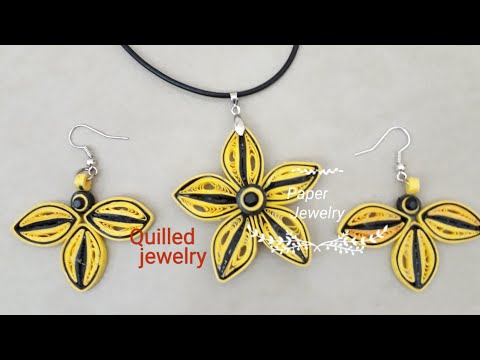 For more infomation >> Quilled Jewelry Set.Paper jewelry. Quilling earrings. Quilled pendants. How to make Paper Pendants? - Duration: 8:17.
  For more infomation >> ♪ Mangetsuu feat. Clueey - Gra Warta Torcha - Duration: 3:14.
 For more infomation >> VANPİR&KÖYLÜ - (YENİ KONSEPT) - Duration: 5:18.
  For more infomation >> تورتة عيد الميلاد تحمل بكتيريا أكثر مما تتوقع! - Duration: 0:47.

 For more infomation >> Mysteriöse Muster am Meeresboden – Kugelfisch als Künstler - Duration: 3:01.
  For more infomation >> 【Lon】 The Powerful Kitty! ! ! [CC Available]|Kinoshita Yuka - Duration: 4:11.
  For more infomation >> Mini Croque Madame - Duration: 9:16.

Không có nhận xét nào:
Đăng nhận xét