Welcome to the Endless Knot!
Today we're mashing up history and etymology in a half-baked story about the potato!
Consider the potato battery, that staple of science fairs and classrooms--and a number
of experiments being run by our edutuber friends!
It turns out that in addition to teaching us about how electricity is generated, the
humble potato battery can show us a lot about history.
Let's start with the history of the potato battery itself.
While we don't know who first came up with the idea, there is a persistent story floating
around the internet that it was one William A Borst who, when helping his stepdaughter
come up with a science fair experiment in 1983, remembered a classroom experiment involving
using a potato as a battery, and thus came up with the idea for a potato powered clock.
So perhaps Borst's own teacher came up with the potato battery idea?
We may never know.
But the invention of the battery itself is rather more well known.
Luigi Galvani (from whom we get the word galvanism) had been experimenting in 1786 with what he
called "animal electricity", after noticing that touching a frog's leg with a piece
of metal caused its muscles to twitch and thus reasoning, incorrectly, that animals
were the source of the electricity.
However, another scientist, Alessandro Volta (from whom we get the word volt) figured out
he was wrong and that the electricity was produced by an interaction between two different
types of metal in Galvani's apparatus, and went on in 1800 to construct the first battery,
by making a pile of alternating slices of copper and zinc submerged in some slightly
acidic liquid creating a continuous flow of electricity.
Funny thing is, the word battery with reference to electricity was coined over fifty years
before this in 1748 by Benjamin Franklin.
He had been experimenting with Leyden jars (named after the Dutch city Leiden where they
were invented), basically an apparatus for storing a static charge of electricity (rather
than the continuous current of electricity produced by Volta's pile).
Connecting up a series of these Leyden jars and then discharging them all at once was
called a battery, by way of analogy to the use of the word battery to refer to the discharge
of artillery, essentially a series of cannon being discharged and thus bombarding or in
other words battering an enemy target.
So the progression is from the verb "to batter" or strike, to a unit of artillery
or cannons, to the sudden discharge of static electricity.
The word battery was then later used to refer to the voltaic pile which could deliver a
continuous current.
So the battery wasn't originally a battery, and funnily enough the potato wasn't originally
a potato.
It was in fact the sweet potato.
It seems that Europeans encountered the sweet potato first in the Caribbean.
It was called batata in the Caribbean Taino language, and it's from this word that English
through Spanish gets the word potato, though at least one dictionary posits that the word
potato is a blend of the Taino word batata, and the word papa, which is the non-sweet
potato in Quechua, the language of the people of the Andes such as the Inca.
Well I suppose it's not too surprising that the potato and the sweet potato were confused
with one another by Europeans.
What did they know about these exotic starchy tuberous roots that were arriving aboard ships
from the so-called New World?
Attempts by the English botanist John Gerard to clear up the whole naming fiasco only served
to further confuse things, by adding such qualifiers as "common potato" for the
sweet potato, and "Virginia potato" for the white potato, under the mistaken assumption
that that's where they came from, and also introducing the terms "Spanish potato"
and "bastard potato", with the implication that the white potato was initially less important
than the sweet potato.
Other European languages went different routes, such as the German word Kartoffel, derived
from the Italian tartufolo meaning "truffle" (well I suppose that makes some sense), French
pomme de terre "earth apple" and Swedish jordpäron "earth pear".
The nickname spud comes from the name of a kind of small poor knife, later a type of
gardening implement or spade in the 1660s, being first applied to the potato itself in
New Zealand English in 1845.
The actual potato comes from the Andean mountains where it was probably domesticated by farmers
around 10,000 BCE.
You see grains don't grow well in the Andean plateau known as the altiplano.
Potatoes, on the other hand, are easy to grow in that region.
However, there's the problem of storage.
You may perhaps know that civilization in the middle east was kicked off by grain agriculture
and the development of clay jars to store the grain and keep it dry, and the development
of writing to keep track of it all.
Well the Andean civilizations had their own technological breakthrough.
They figured out a way of freeze drying the potatoes by leaving them out overnight in
the cold of those high mountains, and then treading on them to express the water out.
This chuño, as the result is called, could then be kept frozen in underground storage
chambers.
And this preservation technique therefore allowed for taxation, an inevitable consequence
of surplus, which in turn led to the sorts of things that a complex civilization can
engage in such as waging war, building roads, and developing other types of infrastructure.
And thus we have the Inca empire.
So we could say that the potato powered the Inca empire.
It was also a crucial power source for the Spanish, when they arrived in South America.
You see they were after all the silver that could be mined there, and they fed their conscripted
work force on the potatoes, making Spain quite wealthy.
Of course the influx of silver into Europe, fuelled by these potatoes, led to inflation
and destabilization worldwide.
We don't know exactly when and how the potato made it to Europe, though presumably they
were taken on board Spanish ships and formed part of the ships' stores for the homeward
journey, with the remnants dumped on arrival, thus spreading the plant.
But in fact, the spread and adoption of the potato through Europe was relatively slow.
There was an initial distrust of the potato, related as it was to the deadly nightshade.
It also came up against established field routines, with specific crop rotations, that
allowed the fields to go fallow to maintain soil nutrients.
Initially therefore it was more commonly used as an ornamental plant than as a food source.
It was also believed to be an aphrodisiac, a fact which could work both for and against
its reputation; it was sometimes denounced as wicked, but on the other hand Shakespeare
has his lecherous character Falstaff exclaim "Let the sky rain potatoes!"
The French Enlightenment encyclopedist Denis Diderot slagged off the humble spud, writing
"no matter how you prepare it, the root is tasteless and starchy", further stating
that "it cannot be regarded as an enjoyable food, but it provides abundant, reasonably
healthy food for men who want nothing but sustenance".
He also blamed the potato for its "windiness", but added "what is windiness to the strong
bodies of peasant and labourers?"
So I suppose he did at least sniff out its potential for powering the workers of the
industrial revolution.
And indeed that's one of the ways the potato changed the world, according to historian
William H. McNeill.
Because the potato caused a kind of feedback loop in Europe, which came to have worldwide
implications.
Potatoes are a very energy-dense food.
Their calories per acre required to grow them is two to four times higher than grain, but
they're also quite labour intensive to grow.
Remember the crop rotation system?
Allowing some of your fields to go fallow and then ploughing them early in the season
is also a good way to control weeds with relatively little effort.
Now, however, you could grow potatoes in the fallow fields since they wouldn't deplete
the soil, but this meant that the fields had to be carefully weeded by hand, so you needed
a bigger work force.
But since not only is the potato crop more energy dense than grain, since you grow the
potatoes in fields left to fallow anyway, you don't have to decrease the grain supply.
One and one make three.
And the population boom that results provides all the labour you need, so a literal feedback
loop!
What's more because of the population density in Europe, that overflow population impacted
the urban centres as well, thus supplying a workforce to drive the industrial revolution
that was happening at the time.
And so the combined population growth and industrialization allowed for the northern
European ascendancy and worldwide colonization.
It was a perfect storm as they say.
The second way the potato changed the world according to McNeill has to do with its utility
in war.
You see in a sense it reduced the knock-on destructiveness during war.
One of the big problems with marshaling a large army is feeding that army.
An army would tend to deplete the food sources within an area, leading to local food shortages,
but the potato could provide a cushion against this.
And what's more, the population boom meant more men to enlist in armies and navies.
So there was a sort of 18th and 19th century military-agricultural complex, or perhaps
with the industrial revolution going on at the time too we should say military-agro-industrial
complex.
And so it's perhaps not surprising that it was a French army doctor, one Antoine-Augustin
Parmentier, who got all hot for the potato, after seeing its benefits in the Seven Years
War.
He became a sort of spokesman for the spud, and began a multi-pronged PR campaign to promote
it, which led the potato to become more widely accepted and eaten.
For instance he staged publicity stunts like hiring armed guards for his potato patch to
give the impression they were valuable, and then instructed his guards to accept bribes
from those thus persuaded to distribute the potatoes.
And this is where our friend and battery coiner Benjamin Franklin comes back into the story.
Because Franklin and Parmentier cooked up the idea of holding a potato party dinner
for promotion and invited various celebrities to the do.
Nothing like a celebrity endorsement!
Parmentier even got King Louis XVI and Marie Antoinette to wear promotional potato blossoms,
kicking off a brief vogue for the decorative vegetable.
But before we go, there's one last thing to say about potatoes and the military.
Because the potato cannon, that other stalwart of potato-based DIY experiments, was in effect
invented during WWII.
It was originally designed as the Holman projector to fire small projectiles like grenades several
hundred feet using only compressed air.
Apparently when it was first demonstrated for Winston Churchill, as there was accidentally
no actual ammunition available, they used bottles of beer--to the delight of the Prime
Minister!
There are possibly apocryphal stories of the cannons being used to fire potatoes at low
flying German aircraft, but one way or the other the Holman Projector gained the nickname
potato cannon.
So this story of the potato has taken us from the potato battery in the electrical sense
to the potato battery in the literal cannon sense, and along
the way has shown us how the humble potato has been a power source in more ways than
one.
For more about potatoes, the potato battery, and the potato cannon, click on the playlist
for some videos featuring experiments and more by other educational YouTubers.
See what I did there!
Thanks for watching!
If you've enjoyed these etymological explorations and cultural connections, please subscribe
to this channel or share it.
And check out our Patreon, where you can make a contribution to help me make more videos.
I'm @Alliterative on Twitter, and you can read more of my thoughts on my blog at alliterative.net
Some of the other videos in this collaboration are looking at what type of potato works best
as a battery, whether a potato cannon can be used to make chips, psychological phenomena
related to potato chips, and the potato's role in achieving food security.
Click on the playlist to see them!
 For more infomation >> Stranissimi modi per bruciare 200 calorie - parodia Scienziati MAI - Duration: 2:32.
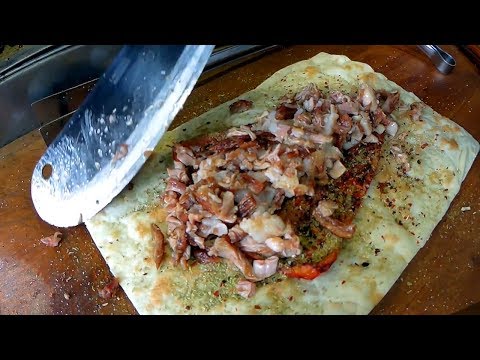 For more infomation >> TÜRKİYE'DE TEK: LAVAŞ EKMEĞİNDE KIRMIZI BİBERLİ KOKOREÇ - CURCUNA KOKOREÇ 2017 - Duration: 16:37.
  For more infomation >> "Первый канал" заблокировал пиратские версии "Интервью с Путиным" (16.06.2017) - Duration: 1:47.

 For more infomation >> mobile.de Wechselmeister // Marco // Der Jäger - Duration: 1:47.
 For more infomation >> Che aspetto hanno 200 calorie? - Duration: 3:47.
 For more infomation >> [Poor travel澳門] 黎左甘多次澳門!真係第一次黎漁人碼頭!Macau Fisherman's Wharf!Macau Travel 2017 - Duration: 2:25.
  For more infomation >> Bullet Journal Flip Through - April To June - Duration: 12:07.
  For more infomation >> Jack & Dean ITA - Bed Head - FRB - Duration: 3:46.


Không có nhận xét nào:
Đăng nhận xét